
I’m not here to be your expert. I’m here to be real with you — human to human.

Hello, my name is Brittany. You can call me Bini.
I’m trained as a therapist, though that word has never felt wide enough to hold the fullness of this work. I am a practitioner, a guide, a listener, a woman shaped by many thresholds. I have knelt in the rawness of my own life and stayed long enough to learn what it means to be held, rather than to hold myself together.
I began my professional path as an Occupational Therapist, curious about what truly helps people change. In hospitals, schools, and community settings, I worked within systems — focused on function, outcomes, and tools. And over time, I began to notice what those systems could not touch.
One season in particular marked a turning point.
I was working for educational settings, supporting the emotional and behavioural needs of children and teenagers through classroom-based practices and educator guidance. As I listened more closely, it became clear that many of the adults tasked with holding these young people were themselves overwhelmed, dysregulated, and unsupported.
Something in me stopped.
How can healing take root if the environments we live within — and the inner lives of those shaping them — are left unexamined?
That question became a threshold. It quietly reoriented my work and deepened my understanding of what formation truly asks of us.
This inquiry has guided me through many landscapes


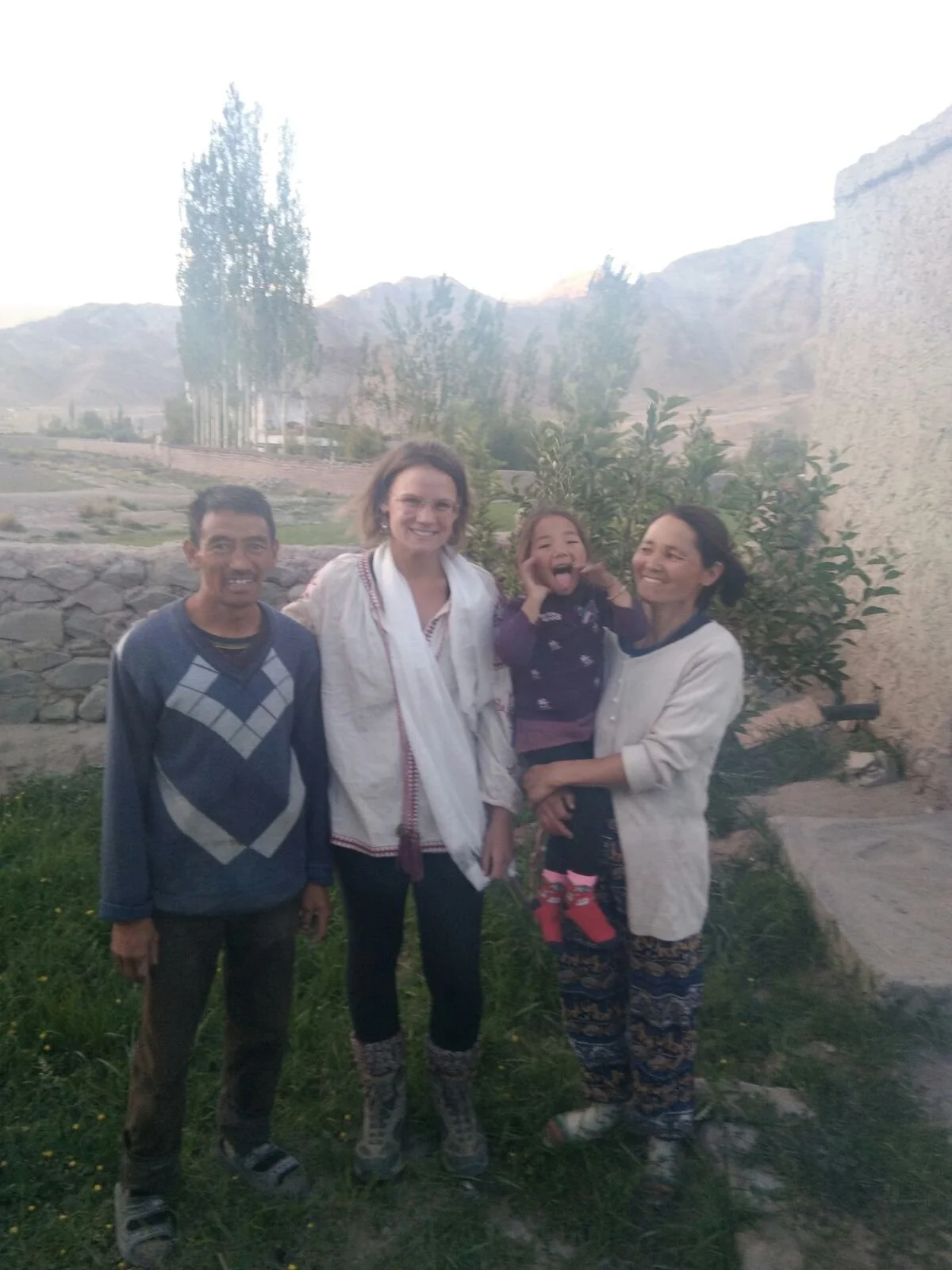

✺ Re-structuring learning spaces for children in India living with disability
✺ In shelters supporting women and children fleeing violence
✺ Inside trauma response teams and suicide prevention initiatives, in schools, early leaning spaces and family homes
✺ Co-creating intergenerational, community-wide nature-based learning spaces
✺ Facilitating change for families navigating neurodiversity and behavioural complexities
✺ Spending long periods in silence, study, and prayer — learning to listen beyond my own effort, and to trust what is revealed when we slow down enough to be guided.

The Truth About Trauma
Through all of this, one truth has remained steady:
Trauma does not happen in isolation.
It happens in relationship — and it is healed in relationship.
Trauma often forms when disconnection becomes safer than remaining attached to what we need most. Healing, then, is not a performance or a project. It is the gradual restoration of trust — in the body, in relationship, and in God as the source of safety and life.
My work has been shaped by many teachings and trainings, including Compassionate Inquiry, but the deepest formation has come through life itself — through suffering, loss, devotion, rupture, and the slow learning of surrender.
I have come to know this:
Healing is not found in doing more, knowing more, or fixing ourselves.
Healing is an increased capacity to be present —
to honesty,
to feeling,
to discomfort,
without turning away.
This isn’t therapy-as-usual.
It is a formational collaboration — between your nervous system, this moment, and the safety we cultivate together — in service of a life shaped by trust rather than self-reliance.
We move slowly.
We listen to the body.
We notice what has been protecting you, and why.
Not to perfect the self,
but to make space for re-orientation, restoration, and surrender.
If you are a parent, a seeker, a space holder, or someone who knows they are ready to be formed by something deeper than effort — you are welcome here.
What Working With Me Feels Like
The ways I work are not tools for self-improvement.
They are supports for slowing down, listening, and allowing deeper re-ordering to take place.
Each modality is held within a relational, formational context — oriented toward safety, trust, and being guided rather than self-directed change.
This work draws from
Presence-based, relational therapy
Grounded in listening, attunement, and creating conditions where the body no longer has to stay on guard.Psychosomatic Therapy, informed by Compassionate Inquiry
Supporting the softening of protective patterns and meeting what has been held beneath them — without force or urgency.Trauma-sensitive nervous system care
Attending to regulation, pacing, and safety so change can occur without overwhelm.Somatic and parts-informed work
Listening to the ways different parts have learned to protect, adapt, and survive — and allowing them to rest when safety is restored.Relational repair and boundary work
Supporting clearer contact with self and others through honesty, responsibility, and steadiness.Occupational Therapy roots in meaning and creativity
Attending to how daily life, rhythm, and environment shape our capacity to live with integrity and presence.Contemplative ritual and nature-based practices
Creating space for reflection, reverence, and re-orientation beyond the thinking mind.
These are not techniques to master.
They are ways of making space — for trust to return, for safety to grow, and for life to be shaped slowly and faithfully.
How It Begins
We begin with an Inquiry Call.
This is a spacious, honest conversation — not a consultation and not a commitment.
It’s a time to speak openly about where you are, what feels unsustainable, and what you sense you are being invited toward. I’ll ask questions, listen carefully, and reflect back what I notice.
This conversation is as much about discernment as it is about support.
If we both sense readiness and alignment, I will offer a way forward — one that asks for willingness, participation, and care. This work is formational in nature, and it’s important that entering it feels like a clear and conscious choice.
You are never persuaded here.
And nothing moves forward without consent.
If it’s not the right time or fit, we honour that too.
Formation cannot be rushed.
It begins when there is space to say a real yes.
Professional and Therapeutic training
My work has been shaped through many years of professional training, clinical practice, and lived experience. I hold these teachings with respect — not as identities or authorities — but as formative influences that have informed how I listen, accompany, and care.
Bachelor of Occupational Therapy (Honours)
Monash University (2016)Compassionate Inquiry — Professional Certification & Mentorship
Trauma-informed psychotherapeutic training developed by Dr. Gabor Maté and AssociatesTrauma-informed wellbeing facilitation, influenced by:
– Berry Street Education Model
– Dadirri Trauma Healing and Aboriginal Mindfulness (We Al-li)
– Early Childhood Trauma Recovery and community recovery following natural disaster (Emerging Minds)Presence-based and somatic practices, including:
– Vipassana meditation (as taught by S. N. Goenka)
– Advanced Meditation Teacher Training (1 Giant Mind - Vedic worldview)Relational and developmental training, including:
– Coaching apprenticeship and ICF-aligned life coaching
– Adult Children of Alcoholic and Dysfunctional Families (ACA) — 12-step participationBody-based and contemplative movement practices, including:
– Hatha Vinyasa Yoga Teacher Training
– Yin and embodied somatic yoga trainingRitual and contemplative practices, including:
– Cha Dao (Tea Practice), with gratitude to the Global Tea Hut tradition
Earlier seasons of my life included study within Eastern and Vedic traditions. I hold these experiences with gratitude for what they revealed — while recognising that my current work is no longer grounded in synthesis, but in discernment and surrender.
All of this training serves one purpose:
To support the slow, relational work of formation — where safety, trust, and guidance are allowed to take root.
My work is not an integration of many paths, but a practice of listening, discernment, and faithfulness to the one I now walk